
Keri Imhof
Owner & Loan Officer | Edge Mortgage, Inc.
NMLS # 1440820
970-744-0000
Buying a home without a large down payment may sound difficult, but for some Ohio homebuyers, a USDA loan can make it possible to purchase a home with no down payment.
USDA loans help qualified borrowers purchase homes in eligible rural areas, provided they meet income, property, and other program requirements. And despite the name, “rural” doesn’t necessarily mean living miles from everything. Many buyers are surprised by the types of communities and properties that may qualify.
If you’re considering buying a home in Ohio, understanding how USDA loans work can help you determine whether this type of financing belongs on your list of options.
If you’re still learning about the overall homebuying process, our guide to how to buy a house in Ohio walks you through the process from preparing your finances to closing on your new home.
What Is a USDA Loan?
A USDA loan is a mortgage designed to help eligible borrowers purchase homes in qualifying rural areas. The program is backed by the U.S. Department of Agriculture through USDA Rural Development.
One of the biggest advantages of a USDA loan is the possibility of buying a home with no down payment for qualified borrowers.
USDA loans also differ from many traditional mortgages because eligibility depends on more than the borrower. The household and the property must meet USDA requirements.
That means three questions are particularly important:
- Does the borrower qualify?
- Does the household meet USDA income requirements?
- Is the property located in a USDA-eligible area?
If all three pieces fit, a USDA loan can be an attractive home financing option.
How Do USDA Loans Work in Ohio?
USDA’s Single Family Housing Guaranteed Loan Program works through approved lenders. Rather than borrowing directly from USDA, most borrowers using the Guaranteed Loan Program obtain their mortgage through an approved lender, with USDA providing a guarantee on the loan.
USDA loans are just one of several mortgage programs available to Ohio homebuyers. Our guide to home loan options in Ohio compares USDA financing with FHA, VA, and conventional loans and can help you understand the broader differences between these programs.
For a USDA loan specifically, both the borrower and property need to meet the program’s requirements.
Do USDA Loans Really Require No Down Payment?
For qualified borrowers, USDA’s Guaranteed Loan Program offers 100% financing, which means no down payment is required.
That’s one of the features that makes USDA financing worth exploring for buyers who qualify but don’t want to put a large amount of money down on a home. However, no down payment does not necessarily mean no money is needed to buy a home.
Homebuyers may still have expenses associated with purchasing and financing a property, including closing costs, prepaid taxes and insurance, inspections, and other transaction-related costs.
Depending on the transaction and current program requirements, some eligible costs may be financed or covered through other permitted sources.
The important distinction is that USDA financing can eliminate the traditional down payment requirement for qualified borrowers.
What Areas of Ohio Are Eligible for USDA Loans?
This is where USDA loans can get interesting. People sometimes hear “rural home loan” and assume USDA financing is only available for farms or homes far away from cities.
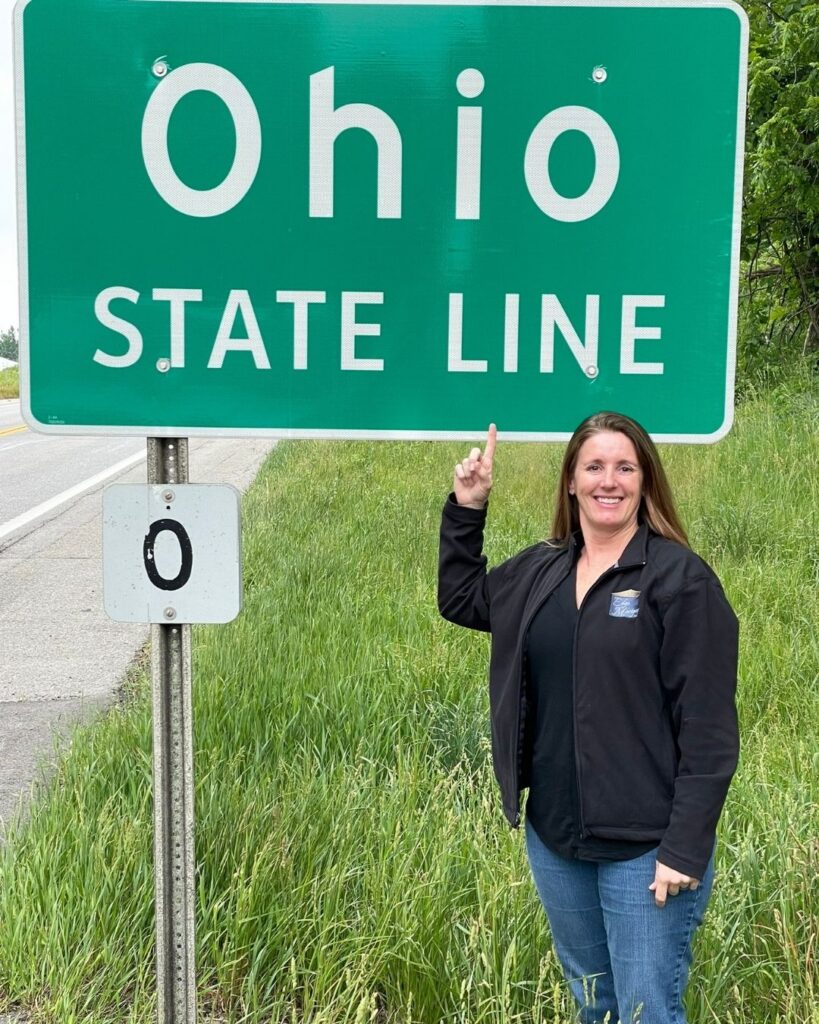
That’s not necessarily the case.
USDA determines which geographic areas are eligible for its housing programs. Depending on the location, eligible areas can include small towns and communities outside larger metropolitan areas.
If you’re still deciding where to search, our guide to affordable places to live in Ohio explores several communities and the factors that can affect the overall cost of homeownership.
Instead of assuming a property will or won’t qualify based on how rural it feels, buyers can use the USDA Property Eligibility Tool to check whether a location may meet the program’s geographic requirements.
Property eligibility can change, so current USDA information should always be used when evaluating a specific home.
Buyers looking in Southeast Ohio may find communities worth exploring for USDA financing, but eligibility is property-specific and should always be verified using the USDA eligibility tool.
Who Qualifies for a USDA Loan?
USDA eligibility involves several factors.
Qualified borrowers generally need to meet requirements related to:
- Household income
- Ability to repay the mortgage
- Credit history
- Occupancy
- Citizenship or eligible noncitizen status
- Property location and eligibility
- Other current USDA program guidelines
The home must generally be used as the borrower’s primary residence. USDA Guaranteed Loans are not intended for purchasing vacation homes or income-producing investment properties.
Because eligibility depends on both the borrower and the property, talking with a mortgage professional early in the process can help you understand whether USDA financing is realistic for your situation.
What Are the Income Requirements for USDA Loans?
USDA loans have household income requirements. This is an important distinction because USDA eligibility may consider income from members of the household in accordance with program guidelines, while mortgage qualification involves determining the income that can be used to repay the loan.
Income limits vary based on factors such as household and property location and are subject to current USDA requirements.
Rather than relying on an income limit you find in an older article online, check the USDA Income and Property Eligibility Site or talk with a mortgage professional who can review current requirements for your situation.
What Credit Score Do You Need for a USDA Loan?
USDA eligibility is not determined by a single universal credit-score number. Credit history is still an important part of mortgage qualification, and lenders evaluate whether borrowers demonstrate the willingness and ability to manage and repay debt.
Your overall financial profile matters, including factors such as income, existing debts, credit history, and the specifics of the loan application.
If you’re unsure whether your credit is ready for a mortgage, don’t assume that one number automatically determines whether you can buy a home. A mortgage professional can review your situation and explain which loan programs may be available to you.
What Types of Homes Can You Buy With a USDA Loan?
USDA Guaranteed Loans can be used for eligible residential properties that will serve as the borrower’s primary residence.
Depending on current program requirements, eligible property types may include new or existing homes and certain other residential property types.
The property itself must meet USDA requirements in addition to being located in an eligible geographic area.
USDA loans generally aren’t designed for purchasing an income-producing property or a second home.
If you’ve found a home you’re interested in, your lender can help determine whether both the property type and location meet current USDA guidelines.
USDA Loans vs. FHA Loans
USDA and FHA loans are both government-backed mortgage options, but they serve different purposes. One of the biggest differences is geography.
FHA loans are not limited to USDA-designated rural areas, while USDA loans require the property to be located in an eligible area.
USDA loans can provide no-down-payment financing for qualified borrowers. FHA loans offer low-down-payment financing but generally require a borrower contribution toward the purchase.
The programs also have different mortgage insurance or program fee structures and different eligibility requirements.
Neither is automatically better. The right choice depends on your finances, the home you’re purchasing, and your overall goals.
USDA Loans vs. Conventional Loans
Conventional loans are not part of a government loan program and generally do not have USDA’s geographic or household-income eligibility requirements.
They can offer greater flexibility for some borrowers and properties.
USDA loans, however, offer the potential for no-down-payment financing to qualified borrowers purchasing in eligible areas.
A buyer who qualifies for both programs shouldn’t necessarily choose based only on the down payment. Comparing the overall payment, upfront costs, ongoing costs, eligibility requirements, and long-term financial goals can provide a much clearer picture.
What Costs Should You Expect With a USDA Loan?
Although USDA loans may not require a down payment, there are still costs associated with getting a mortgage and purchasing a home.
These may include:
- Closing costs
- Prepaid property taxes
- Homeowners insurance
- Appraisal-related costs
- Inspection costs
- USDA program fees
- Other transaction expenses
The amount you need at closing depends on the specific transaction, current USDA requirements, lender requirements, and whether any eligible costs are financed or paid through other permitted sources.
If you’re trying to estimate how a home price could translate into a monthly payment, our mortgage calculator can give you a helpful starting point as you plan your budget.
Your Loan Estimate and other mortgage disclosures can help you understand the costs associated with your mortgage payment and specific loan.
Can First-Time Homebuyers Use USDA Loans?
Yes. USDA loans can be a useful option for qualified first-time homebuyers, but you don’t have to be a first-time buyer to use the program.
Repeat buyers may also qualify if they meet current USDA requirements.
For someone purchasing a first home, the possibility of financing without a traditional down payment may make USDA financing particularly worth exploring.
But the best mortgage isn’t determined by whether you’re a first-time buyer. It depends on your finances, property, goals, and available loan options.
Are USDA Loans Only for Farms?
No.
This is one of the biggest misconceptions about USDA home loans.
USDA’s Guaranteed Loan Program is designed to help qualified buyers purchase eligible residential properties in designated rural areas. You do not need to be a farmer, and you don’t need to be purchasing a farm.
The key is whether the property and borrower meet USDA’s requirements.
That’s why checking eligibility is more useful than simply looking at a house and deciding whether it seems “rural enough.”
How to Apply for a USDA Loan in Ohio
The process of applying for a USDA Guaranteed Loan is similar in many ways to applying for other mortgages.
You’ll typically start by talking with an approved mortgage lender or mortgage broker who offers USDA financing.
The lender will review information such as your income, assets, debts, credit history, and other financial details. You’ll also need to find a property that meets USDA’s geographic and property requirements.
Once you’re under contract, the loan moves through the mortgage approval process, including property and underwriting requirements.
Starting with a mortgage preapproval can help you understand your budget and whether USDA financing may be a realistic option before you begin seriously shopping for homes.
Why Work With a Mortgage Broker for a USDA Loan?
A USDA loan may sound attractive because of its no-down-payment feature, but that doesn’t automatically mean it’s the best mortgage for every eligible borrower.
That’s where comparing your options matters.
A mortgage broker can look at your financial situation and help you compare USDA financing with other programs that may be available to you.
The goal isn’t simply to qualify for a mortgage. It’s to understand the differences and choose financing that makes sense for your home purchase and financial goals.
If you’re deciding who to work with, understanding what matters when comparing mortgage lenders in Ohio can help you evaluate more than just the advertised interest rate.
Why Choose Edge Mortgage, Inc. for Your USDA Loan in Ohio?
At Edge Mortgage, Inc., we believe your mortgage should fit your life, not the other way around.
As an independent Ohio mortgage broker, we can compare lenders and loan programs rather than trying to fit every borrower into a single option. If you’re considering a USDA loan, we’ll help you understand how it compares with other financing that may be available to you.
We’ll walk through the numbers, answer your questions, and help you understand what makes sense based on your goals and circumstances.
You don’t need to know whether USDA, FHA, VA, or conventional financing is right for you before you call us. That’s our job.
Our five-star reviews reflect what we work hard to provide throughout the mortgage process: clear communication, responsiveness, knowledge, and personal attention.
Frequently Asked Questions About USDA Loans in Ohio
Can I really buy a home in Ohio with no down payment using a USDA loan?
Qualified borrowers purchasing eligible properties may be able to use USDA financing without making a down payment. Other homebuying and closing costs may still apply.
Does my Ohio home have to be in the country to qualify for a USDA loan?
Not necessarily. USDA determines geographic eligibility using its own criteria. Some small towns and communities outside larger metropolitan areas may qualify. Check current USDA property eligibility rather than assuming a home is or isn’t eligible based on how rural the area appears.
Do I have to be a first-time homebuyer?
No. USDA Guaranteed Loans are not limited to first-time homebuyers.
Can I use a USDA loan to buy an investment property?
USDA Guaranteed Loans are intended for eligible homes that will be used as the borrower’s primary residence, not income-producing investment properties.
Can I use a USDA loan anywhere in Ohio?
No. The property must be located in an area that meets USDA’s current geographic eligibility requirements.
Is a USDA loan better than an FHA loan?
It depends. USDA financing may offer advantages for qualified borrowers purchasing in eligible areas, while FHA financing doesn’t have the same geographic restriction. Your finances, property, costs, and goals should all be considered when comparing the two.
Find Out if a USDA Loan Could Work for You
USDA loans can create an opportunity to purchase a home without a traditional down payment, but the real question isn’t simply whether USDA financing sounds good. It’s whether it makes sense for you.
At Edge Mortgage, Inc., we’ll help you understand the requirements, compare your available mortgage options, and look at the numbers so you can make an informed decision.
If you’re thinking about buying a home in Ohio, call Edge Mortgage, Inc. at 970-744-0000. You don’t have to figure out the mortgage process on your own. We’ll help you understand your options and find financing that fits your life and your goals.